

What Is Ultrasound Therapy?
Ultrasound Therapy is a भौतिक चिकित्सा treatment that uses high-frequency sound waves to deliver mechanical energy into targeted soft tissues. Unlike diagnostic ultrasound, which creates images of structures inside the body, therapeutic ultrasound is used as a treatment modality to influence tissues beneath the skin.
At PhysioExpert, Ultrasound Therapy may be used as part of a broader rehabilitation programme when tissue irritation, stiffness, or restricted mobility affects normal movement. The treatment is selected according to the patient’s condition, symptoms, tissue depth, and overall recovery needs.
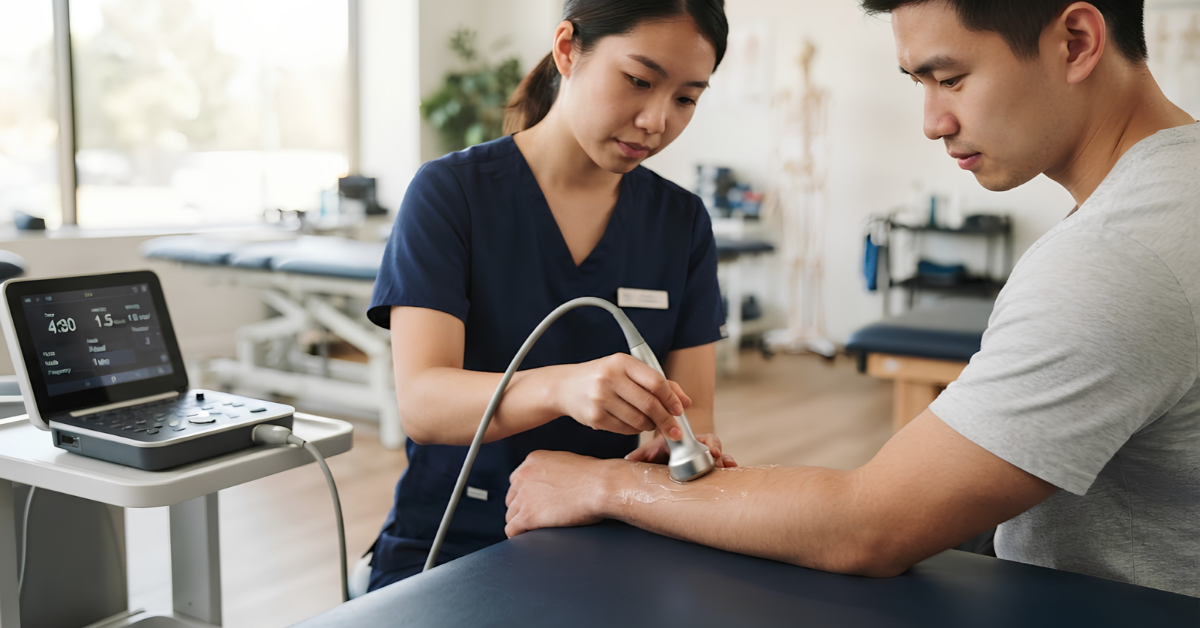
During a session, a physiotherapist applies a suitable coupling gel to the treatment area and moves an ultrasound applicator over the skin. The sound waves enter the tissues and produce mechanical effects, while certain settings can also create controlled thermal effects.
Ultrasound Therapy is generally used alongside active rehabilitation rather than as a standalone solution. Depending on the condition, it can be combined with stretching, strengthening exercises, manual techniques, mobility work, and other physiotherapy interventions.
The Core Objectives of Ultrasound Therapy
The main objectives of Ultrasound Therapy are to support tissue management and make movement-based rehabilitation more comfortable and effective.
Manage Local Tissue Irritation:
Appropriate ultrasound settings may help manage discomfort associated with irritated soft tissues and support the rehabilitation process.
Improve Tissue Extensibility:
Therapeutic heating, when clinically appropriate, can temporarily increase the extensibility of selected soft tissues before stretching or mobility exercises.
Reduce Pain Sensitivity:
Ultrasound may be incorporated into treatment plans to help reduce local pain and improve tolerance for movement.
Support Soft Tissue Recovery:
Mechanical and thermal effects may be used to complement rehabilitation for selected tendon, ligament, muscle, and other soft tissue problems.
Prepare Tissues for Exercise:
When stiffness limits movement, ultrasound may be used before stretching or therapeutic exercise to help the patient participate more comfortably.
Enhance Overall Rehabilitation:
Ultrasound can form one component of a wider physiotherapy programme designed around the patient's functional goals.
Types of Ultrasound Used in Physiotherapy
Continuous Ultrasound
Continuous ultrasound delivers sound-wave energy without regular interruptions. It is commonly considered when a controlled thermal effect is desirable in suitable soft tissues.
Pulsed Ultrasound
Pulsed ultrasound delivers energy intermittently rather than continuously. This reduces the average energy delivered to the treatment area and may be selected when a lower thermal effect is preferred.
Thermal Ultrasound
Thermal applications use appropriate parameters to produce a controlled increase in tissue temperature. This may be useful before stretching or mobility work when tissue stiffness is a concern.
Non-Thermal Ultrasound
Non-thermal applications focus on mechanical effects produced by the sound waves rather than relying primarily on tissue heating. The settings can be adjusted according to the clinical objective.
Targeted Therapeutic Ultrasound
The physiotherapist can adjust the frequency, intensity, treatment duration, and applicator movement to target a particular region. This allows the treatment to be incorporated into a condition-specific rehabilitation plan.
Physiological Effects of Ultrasound Therapy
Therapeutic ultrasound can influence tissues through mechanical and, with suitable settings, thermal effects.
Mechanical Tissue Stimulation:
Sound waves create microscopic mechanical movement within tissues, which may influence local cellular and tissue processes.
Controlled Tissue Heating:
Continuous ultrasound at appropriate intensities can increase tissue temperature, potentially improving tissue extensibility for a limited period.
Altered Tissue Viscosity:
Heating can influence the physical properties of certain soft tissues, making movement and stretching easier in selected situations.
Local Pain Modulation:
Ultrasound may contribute to short-term changes in pain perception when combined with other physiotherapy interventions.
Support for Tissue Rehabilitation:
Mechanical and thermal effects may complement exercise-based treatment during recovery from selected soft tissue conditions.
Conditions Treated with Ultrasound Therapy
Ultrasound Therapy may be considered as part of physiotherapy management for selected musculoskeletal and soft tissue problems.
A
Tendon irritation and selected tendinopathies
बी
Muscle strains and soft tissue injuries
C
Ligament-related soft tissue injuries
D
Joint stiffness and restricted soft tissue mobility
E
Scar tissue and selected adhesions
एफ
Bursitis and localized soft tissue irritation
जी
Sports-related soft tissue conditions
Contraindications: When to Avoid Ultrasound Therapy
Ultrasound is not appropriate for every patient or every body region. A physiotherapist should screen for relevant risks before applying the modality.
A
Known or suspected malignancy
बी
Active infection
C
Areas of impaired sensation
D
Certain vascular conditions
E
Sensitive organs or vulnerable tissues
एफ
Unhealed or unstable areas
Integrating Advanced Technology in Ultrasound Therapy
Modern physiotherapy uses treatment technology alongside clinical assessment rather than relying on a modality alone.
Adjustable Treatment Parameters:
Frequency, intensity, pulse ratio, and treatment time can be modified according to the target tissue and rehabilitation stage.
Clinical Response Monitoring:
The physiotherapist can observe changes in pain, stiffness, range of movement, and exercise tolerance to determine whether ultrasound remains appropriate.
Combination Rehabilitation:
Ultrasound may be followed by stretching, joint mobilisation, strengthening, or functional exercises so that any temporary improvement in tissue comfort contributes to meaningful movement.
The PhysioExpert Approach to Ultrasound Therapy
PhysioExpert uses Ultrasound Therapy selectively and combines it with hands-on care and active rehabilitation when appropriate.
आकलन:
Your physiotherapist evaluates the location of symptoms, movement limitations, tissue involvement, medical history, and functional difficulties before selecting ultrasound.
उपचार अनुकूलन:
Ultrasound parameters are adjusted according to the body area, tissue characteristics, treatment goal, and individual tolerance.
कार्यात्मक एकीकरण:
The treatment is connected with exercises and movement training so that improvements in comfort or mobility can be used during active rehabilitation.
रिकवरी शिक्षा:
Patients receive guidance on exercises, activity modification, posture, loading, and other strategies that can help support recovery outside the clinic.
अक्सर पूछे जाने वाले प्रश्न
Is Ultrasound Therapy painful?
Ultrasound Therapy is usually comfortable. With some settings, you may notice mild warmth, but you should not experience significant pain during treatment.
How long does an Ultrasound Therapy session take?
The application itself is usually relatively brief, although the total physiotherapy appointment may be longer because ultrasound is often combined with assessment, exercise, or other treatment techniques.
Can Ultrasound Therapy treat an injury by itself?
Ultrasound is generally used as a supportive modality rather than a complete treatment programme. Exercise, appropriate loading, mobility work, and activity management are often important parts of recovery.
How many Ultrasound Therapy sessions will I need?
The number of sessions depends on your condition, response to treatment, and rehabilitation goals. Your physiotherapist can review your progress and adjust the treatment plan accordingly.
Can I exercise after Ultrasound Therapy?
In many cases, ultrasound can be followed by suitable therapeutic exercises. Your physiotherapist will recommend the appropriate exercises and activity level based on your condition.
अनुभव Advanced Healing with PhysioExpert
Ultrasound Therapy can provide a targeted addition to physiotherapy when soft tissue stiffness, discomfort, or restricted movement forms part of a patient’s problem. By selecting suitable treatment parameters and combining the modality with active rehabilitation, physiotherapists can address the individual needs of each patient.
At PhysioExpert, treatment begins with understanding your condition rather than applying the same technique to everyone. If Ultrasound Therapy is appropriate for your rehabilitation, it can be incorporated into a structured plan designed to improve movement, build strength, and help you return to your everyday activities with greater confidence.

