

What Are PRP Injections?
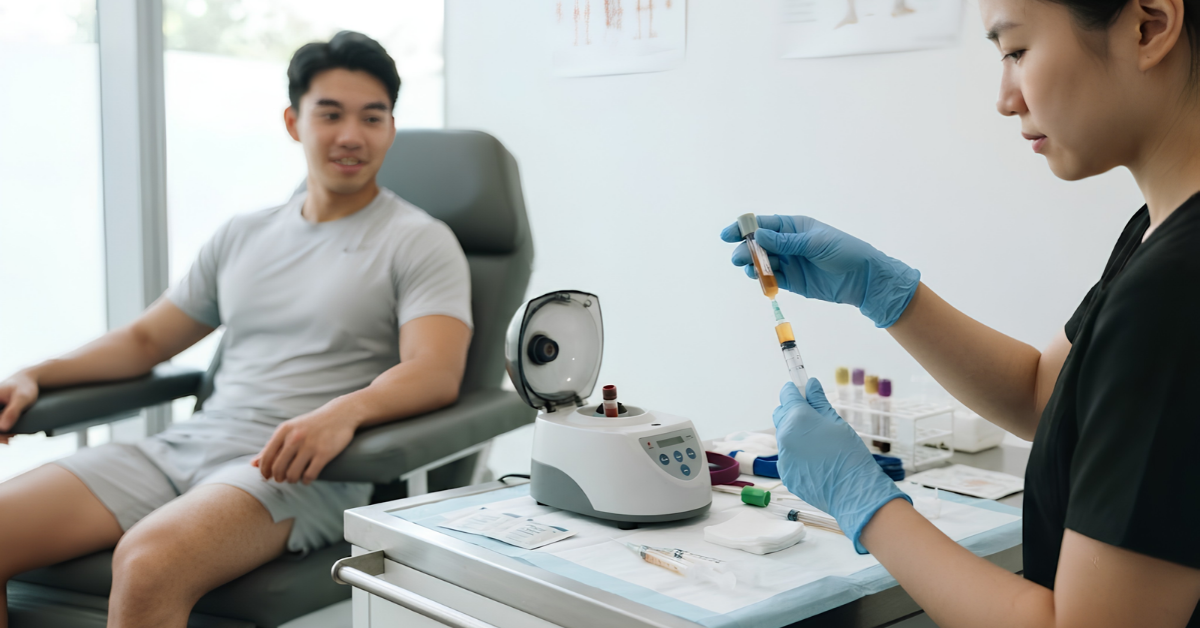
PRP Injections, or Platelet-Rich Plasma Injections, are a regenerative treatment that uses a concentrated portion of a patient’s own blood. Platelets contain proteins and growth factors involved in the body’s natural repair processes. During PRP treatment, a small blood sample is processed to separate and concentrate the platelet-rich portion before it is administered to the targeted area.
At PhysioExpert, PRP Injections may be considered for selected musculoskeletal conditions when conventional rehabilitation alone has not provided the desired progress. The suitability of PRP depends on the diagnosis, tissue involved, symptom duration, medical history, and overall treatment goals.
The procedure generally involves drawing a small amount of blood, processing it in a specialised centrifuge, and preparing the platelet-rich plasma. A qualified medical professional then places the PRP into the intended treatment area using an appropriate injection technique. In some cases, imaging guidance may be used to improve placement accuracy.
PRP is not intended to replace rehabilitation. After an injection, a carefully planned recovery programme can help patients gradually restore mobility, strength, loading capacity, and function. The exact rehabilitation timeline varies according to the treated tissue and the individual’s response.
The Core Objectives of PRP Injections
The main objectives of PRP treatment are to support selected tissue-repair processes while creating a suitable foundation for progressive rehabilitation.
Support the Body's Repair Response:
PRP delivers a concentrated preparation of the patient's own platelets to a targeted area with the aim of supporting natural healing processes.
Address Persistent Tendon Problems:
PRP may be considered for certain chronic tendon conditions when symptoms continue despite appropriate conservative care.
Manage Selected Soft Tissue Conditions:
Depending on the diagnosis, PRP can be evaluated as an option for particular tendon, ligament, or other musculoskeletal problems.
Encourage a Structured Recovery:
The injection can be incorporated into a rehabilitation programme that progressively increases movement and tissue loading.
Reduce Persistent Symptoms:
Some patients may experience improvement in pain and function following PRP, although individual responses vary and results are not guaranteed.
Improve Activity Tolerance:
As symptoms settle, rehabilitation can focus on helping the patient return to exercise, sport, work, or everyday activities.
Types of PRP Injections Used in Clinical Practice
Leukocyte-Poor PRP
This preparation contains relatively fewer white blood cells. It may be considered for certain tendon and joint applications where a lower concentration of leukocytes is preferred.
Leukocyte-Rich PRP
Leukocyte-rich PRP contains a greater proportion of white blood cells along with concentrated platelets. Its use depends on the condition being treated and the clinician's treatment strategy.
Pure Platelet-Rich Plasma
This type focuses primarily on concentrating platelets while limiting other blood components. The preparation method can vary between clinical systems.
Platelet-Rich Fibrin
Platelet-rich fibrin forms a fibrin-based matrix that can retain platelets and other blood components. It is used in some regenerative medicine applications, depending on the clinical setting.
Single-Spin PRP
A single centrifugation process is used to separate and concentrate the desired blood components. The resulting preparation depends on the equipment and protocol used.
Physiological Effects of PRP Injections
PRP is intended to influence biological processes involved in tissue repair, although the response can differ between patients and conditions.
Platelet Concentration:
PRP contains a higher concentration of platelets than normal circulating blood, providing a concentrated source of platelet-derived substances.
Growth Factor Release:
Activated platelets can release growth factors and signalling proteins involved in processes such as cell activity and tissue repair.
Cellular Signalling:
Components within PRP may influence local cellular responses involved in the healing environment.
Extracellular Matrix Activity:
PRP may affect processes associated with the formation and remodelling of connective tissue.
Local Inflammatory Response:
An injection can produce a temporary inflammatory response. This is one reason post-procedure guidance and appropriate activity modification are important.
Conditions Treated with PRP Injections
PRP may be considered for selected musculoskeletal conditions following an appropriate medical assessment.
A
Chronic tendinopathies, including selected cases of tennis elbow
बी
Patellar tendon-related problems
C
Achilles tendon conditions
D
Selected rotator cuff or shoulder tendon disorders
E
Certain ligament injuries
एफ
Plantar fascia-related pain
जी
ome sports-related soft tissue injuries
Contraindications: When to Avoid PRP Injections
PRP is not suitable for everyone. A qualified clinician should review medical history, medications, blood health, infection risk, and the specific condition before proceeding.
A
Active infection
बी
Certain blood disorders
C
Severe anaemia
D
Certain medications
E
Active cancer or serious systemic illness
एफ
Pregnancy or other special circumstances
Integrating Advanced Technology in PRP Injections
Modern PRP treatment can incorporate clinical technology to improve assessment, preparation, and procedural accuracy.
Image-Guided Injection:
Ultrasound or other appropriate imaging can help the clinician identify relevant anatomical structures and guide placement when indicated.
Specialised PRP Processing Systems:
Centrifugation equipment and controlled preparation protocols help produce the intended platelet-rich preparation from the patient's blood.
Rehabilitation Monitoring:
Follow-up assessment can track pain, range of movement, strength, and functional loading so that rehabilitation progresses at an appropriate pace.
The PhysioExpert Approach to PRP Injections
PhysioExpert focuses on selecting PRP only when it has a reasonable role within an individual’s overall musculoskeletal care plan.
आकलन:
Your condition, symptoms, movement limitations, previous treatments, medical history, and functional requirements are reviewed before PRP is considered.
उपचार अनुकूलन:
The treatment plan is developed around the affected tissue, diagnosis, recovery stage, and clinical suitability of PRP.
कार्यात्मक एकीकरण:
Post-injection rehabilitation may include carefully progressed mobility, strengthening, loading, and movement exercises according to the treated area.
रिकवरी शिक्षा:
Patients receive guidance about expected post-procedure symptoms, activity modification, exercise progression, and follow-up requirements.
अक्सर पूछे जाने वाले प्रश्न
Are PRP Injections made from my own blood?
Yes. PRP is prepared from a small sample of the patient’s own blood. The sample is processed to concentrate platelets and other selected blood components before injection.
Are PRP Injections painful?
There can be some discomfort during the blood draw and injection. Temporary soreness or increased symptoms can also occur after the procedure. Your clinician can provide appropriate advice for managing post-injection discomfort.
How long does it take to recover after a PRP Injection?
Recovery varies significantly depending on the tissue treated and the underlying condition. A gradual return to normal loading is often used rather than immediately returning to demanding activity.
Can PRP replace physiotherapy?
No. PRP is generally considered an adjunct rather than a replacement for rehabilitation. Appropriate भौतिक चिकित्सा can help restore strength, mobility, tissue capacity, and function during recovery.
How many PRP Injections will I need?
There is no universal number of injections. Some conditions may be treated with a single injection, while other cases may involve additional treatment after clinical reassessment. The decision depends on your diagnosis and response.
अनुभव Advanced Healing with PhysioExpert
PRP Injections offer a personalised treatment approach because the preparation comes from the patient’s own blood. For selected tendon, joint, ligament, and soft tissue conditions, PRP may be considered when a clinician believes it could complement the wider treatment strategy.
At PhysioExpert, the focus remains on the complete recovery process rather than the injection alone. If PRP is clinically appropriate, it can be incorporated with carefully timed physiotherapy and progressive rehabilitation to help you work toward improved movement, strength, and everyday function.

