
Women's Health Physiotherapy — Delhi NCR
Pelvic Floor, Pregnancy & Postnatal Rehabilitation for Every Life Stage
Specialized prenatal, postnatal, and pelvic floor physiotherapy delivered with compassionate, evidence-based care in a private, judgment-free environment.
95%
Success Rate
96%
Patient Satisfaction
1000s
Women Helped
100%
Private & Confidential
Compassionate, Evidence-Based Care
What Makes Our Women's Health Services Different
We understand that women's bodies go through unique changes throughout life — from pregnancy and childbirth to hormonal shifts and pelvic health challenges.
Private Treatment Rooms
Private, comfortable rooms for every session, protecting your comfort and confidentiality throughout treatment.
Female Physiotherapists Available
Female physiotherapists are available upon request for anyone who prefers that for intimate assessments.
Confidential Consultations
Every consultation respects your privacy, with health information kept strictly confidential.
Judgment-Free Environment
A comfortable space where sensitive conditions are treated with understanding, not embarrassment.
Partner Support Welcome
Your partner or support person is welcome to accompany you when appropriate.
Specialized Training
Our team holds advanced, specialized training specifically in women's health conditions.
What We Offer
Our Women's Health Physiotherapy Services
From pregnancy through postpartum recovery and pelvic floor rehabilitation, our services address the full spectrum of women's health needs.
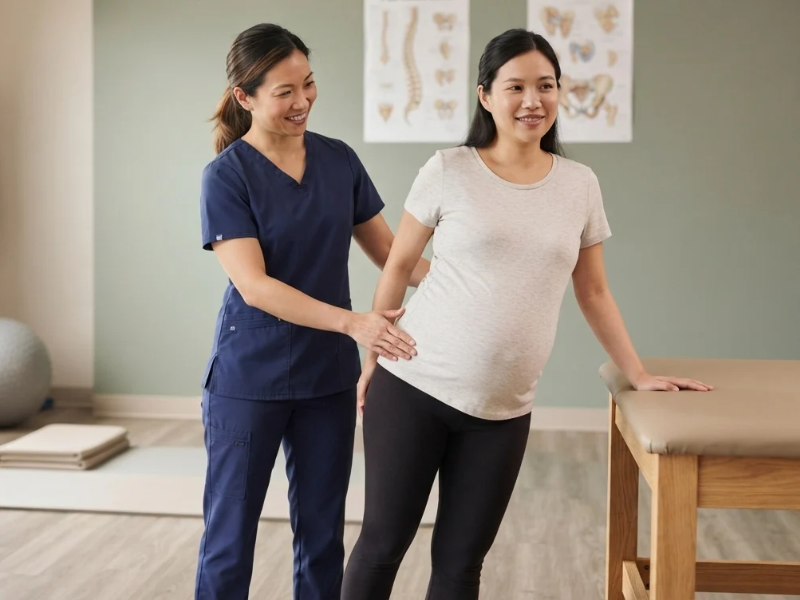
Prenatal Physiotherapy (Pregnancy Care)
Every trimester brings new changes and challenges. Our prenatal physiotherapy supports you through each stage of your pregnancy journey with safe, effective treatments.
Pregnancy back pain & sciatica
Pelvic girdle pain
Postural issues
Diastasis recti (abdominal separation)
Carpal tunnel syndrome
Rib pain & breathing difficulties
Preparation for labor & delivery
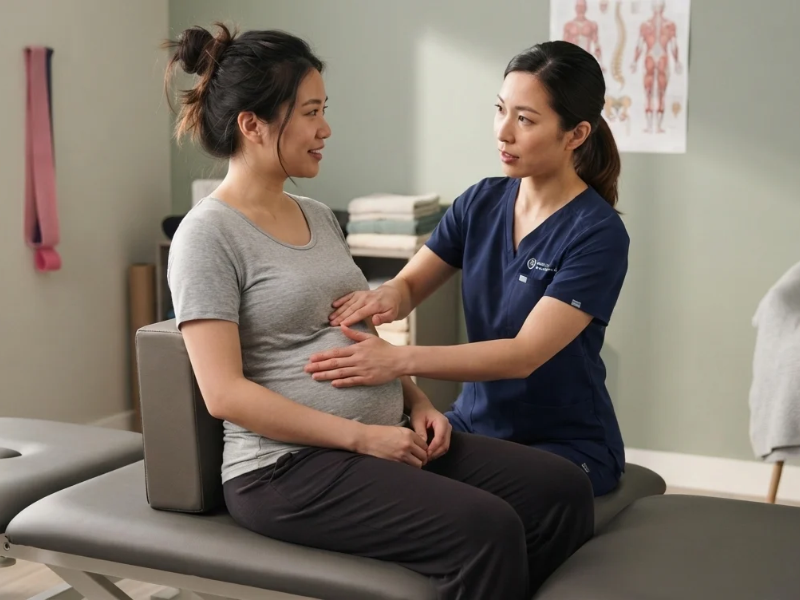
Postnatal Physiotherapy (Post-Delivery Care)
Recovery after childbirth is a journey that requires expert guidance and support. Whether you had a vaginal delivery or C-section, we help you heal properly and regain your strength.
C-section scar management
Diastasis recti treatment
Pelvic floor rehabilitation
Core strength restoration
Safe return to exercise
Posture correction for breastfeeding
Pain management (back, neck, shoulders)
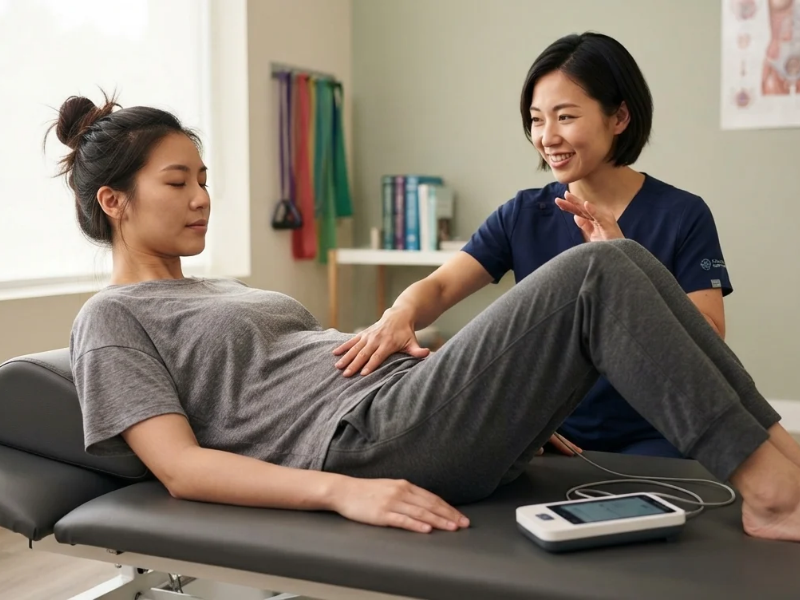
Pelvic Floor Physiotherapy
Pelvic floor dysfunction affects millions of women but often goes untreated due to embarrassment or lack of awareness. We provide specialized, discreet care for these sensitive conditions.
Pelvic organ prolapse
Pelvic pain & discomfort
Painful intercourse
Pre/post-gynecological surgery rehab
Chronic pelvic pain conditions
Education
Understanding Your Pelvic Floor
The pelvic floor is a group of muscles, ligaments, and connective tissue that form a hammock-like structure at the base of your pelvis, supporting your bladder, uterus, and bowel.
Functions of the Pelvic Floor
- Supports pelvic organs
- Controls bladder and bowel function
- Plays a role in sexual function
- Provides core stability
- Assists in childbirth
How Pregnancy & Childbirth Affect It
- Hormonal changes soften tissues
- Weight of baby creates downward pressure
- Stretching during vaginal delivery
- Possible nerve damage or muscle tears
- Surgical impacts from C-section
Your First Visit
What to Expect at Your Pelvic Floor Assessment
Our assessments are gentle and conducted with your comfort as the priority — you're always in control.
We Discuss Your History
Symptoms and concerns, pregnancy and delivery history, bladder and bowel habits, activity levels, and your goals for treatment.
Physical Assessment
Posture and movement observation, breathing pattern assessment, and abdominal muscle function evaluation.
Comfort & Consent, Always
We explain everything before we do it, use draping to maintain your dignity, and proceed only with your informed consent.
Your Personalized Plan
We build a treatment plan and pace around your goals — you set the pace, and we work with you every step.
Program Options
Our Treatment Programs
Structured programs for every stage — from pregnancy through postnatal recovery and specialized rehabilitation.
Prenatal Care Package
Comprehensive pregnancy support
Contact us for current pricing
- Initial comprehensive assessment
- Exercise program for each trimester
- Labor preparation education
- Optional partner education session
- Home exercise videos & progress tracking
Ideal for: first-time mothers, anyone with pregnancy-related pain
Postnatal Recovery Package
Complete post-delivery rehabilitation
Contact us for current pricing
- 6-week postpartum comprehensive assessment
- Diastasis recti & pelvic floor evaluation
- 12 treatment sessions
- Progressive exercise program
- Return-to-exercise clearance
Ideal for: all new mothers, anyone with pelvic floor concerns
Pelvic Floor Rehabilitation
Specialized treatment for dysfunction
Contact us for current pricing
- Initial comprehensive pelvic floor assessment
- 10-12 treatment sessions
- Internal pelvic floor therapy (with consent)
- Biofeedback training (if needed)
- Education on self-management
Ideal for: pelvic pain, incontinence, prolapse
Diastasis Recti Program
Targeted abdominal separation treatment
Contact us for current pricing
- Detailed assessment with measurements
- 8-12 treatment sessions
- Core rehabilitation exercises
- Breathing re-training
- Before/after measurements
Ideal for: postpartum separation, core-related back pain
All programs include an initial comprehensive assessment. Session counts can be adjusted to your needs.
Getting Ready
Your First Visit: Prenatal vs. Postnatal
Here's what to know and bring, depending on where you are in your journey.
Prenatal First Visit
- Bring ultrasound reports, medical records, and any questions written down
- Wear comfortable, loose-fitting clothing
- We'll review your pregnancy history and current symptoms
- Physical assessment of posture, movement, and pain areas
- You leave with a customized treatment plan and home exercises
Postnatal First Visit
- Ideal timing: 6 weeks post-delivery, or when cleared by your doctor
- Bring delivery details, hospital reports — your baby is welcome to join you
- Wear comfortable two-piece clothing for core assessment
- Assessment covers diastasis recti, pelvic floor function, and C-section scar (if applicable)
- Internal examination may be offered — always optional
You're Not Alone
Partner & Family Support
Recovery after childbirth is easier with support. Here's how partners and family can help.
Physical Support
Help with baby care to free up time for exercises, assist with household tasks, and support the exercise routine.
Emotional Support
Listen without judgment, understand that recovery takes time, and celebrate the small victories along the way.
Supporting Her Journey
Encourage seeking help, be understanding about symptoms, support treatment attendance, and avoid pressure around intimacy.
When to Encourage Help
Leaking urine with activity, pelvic pain, visible abdominal separation, or difficulty with daily activities are signs to see a physiotherapist.
Making It Accessible
Insurance & Payment Information
We offer flexible ways to make treatment accessible for every family.
Payment Options
- Package pricing (most cost-effective)
- Session-by-session payment
- Corporate wellness program coverage (if applicable)
- Flexible payment plans available
Insurance Coverage
- Many insurance plans cover physiotherapy services
- We provide detailed receipts for insurance claims
- Assistance with documentation
- Some maternity insurance covers prenatal & postnatal physiotherapy — check your policy or contact us
About PhysioExpert
Why Choose PhysioExpert for Women's Health
Advanced training, compassionate care, and a track record of results — not a generic wellness vendor.
Specialized Expertise
Advanced training specifically in women's health physiotherapy, with experience treating thousands of women.
Compassionate, Understanding Care
Non-judgmental, empowering care focused on your comfort, privacy, and individual needs.
Privacy & Comfort
Private treatment rooms, draping and privacy protocols, and a partner welcome if desired.
Comprehensive Care
We treat root causes, not just symptoms — with an eye toward long-term, whole-body wellness.
Proven Results
95% success rate and 96% patient satisfaction, with thousands of women helped and real testimonials to back it up.
FAQ
Frequently Asked Questions
Common questions about prenatal, postnatal, and pelvic floor physiotherapy.
1 General Questions
When should I start prenatal physiotherapy?
Ideally, as early as possible in your pregnancy. Early intervention can prevent many common pregnancy-related issues. However, it's never too late to start — we can help at any stage of pregnancy.
Is physiotherapy safe during pregnancy?
Yes! Prenatal physiotherapy is safe and beneficial when provided by trained professionals. We use pregnancy-safe techniques and exercises designed specifically for each trimester.
How soon after delivery can I start physiotherapy?
We recommend starting around 6 weeks postpartum after your doctor's clearance. However, if you have specific concerns like severe pain or complications, we can see you earlier for assessment and guidance.
Can I bring my baby to appointments?
Absolutely! We understand that finding childcare can be challenging. Your baby is welcome at your appointments.
2 Pelvic Floor Questions
What is pelvic floor physiotherapy?
Pelvic floor physiotherapy is specialized treatment for the muscles and tissues of your pelvic floor. It includes assessment, education, exercises, and hands-on treatment to address issues like incontinence, prolapse, and pelvic pain.
What is a pelvic floor assessment like?
The assessment includes a discussion of your symptoms and an external observation of posture and movement.
Can physiotherapy help with urinary incontinence?
Yes! Physiotherapy is highly effective for treating urinary incontinence. Studies show that 70-80% of women with stress incontinence improve significantly with proper pelvic floor rehabilitation, often avoiding the need for surgery.
Is pelvic floor treatment painful or uncomfortable?
Treatment should not be painful. Some techniques may cause mild discomfort, but we always work within your comfort level. If you have pain conditions, we use gentle approaches designed to reduce pain while promoting healing.
3 Treatment Questions
What is diastasis recti and how is it treated?
Diastasis recti is the separation of your abdominal muscles along the midline. It's treated through specialized core rehabilitation that focuses on reconnecting the muscles, improving function, and safely progressing your strength. Most women see significant improvement within 8-16 weeks.
Do I need a female physiotherapist?
We offer both male and female physiotherapists. Many women prefer female therapists for intimate examinations, and we're happy to accommodate this request. Just let us know your preference when booking.
How many sessions will I need for postnatal recovery?
This varies based on your individual needs. Typically, postnatal recovery programs involve an initial assessment followed by 6-12 treatment sessions over 8-12 weeks. Some women need more or fewer sessions depending on their goals and conditions.
What should I wear to my appointment?
Wear comfortable clothing that you can move in easily. Bring comfortable workout clothes if we'll be doing exercises.
Can physiotherapy help me lose pregnancy weight?
While our primary focus is on proper recovery and function, we do provide safe exercise programs that support healthy postpartum weight loss. We emphasize healing first, then gradually building strength and fitness in a way that supports your pelvic floor and core recovery.
4 Privacy and Comfort Questions
Is the treatment confidential and private?
Absolutely. All treatments are conducted in private rooms. Your health information is completely confidential and protected. We adhere to strict privacy standards.
What if I feel embarrassed about my symptoms?
Please don't feel embarrassed — we treat these conditions every day and understand how common they are. Our team is compassionate and professional. We've heard it all, and our only focus is helping you feel better.

