

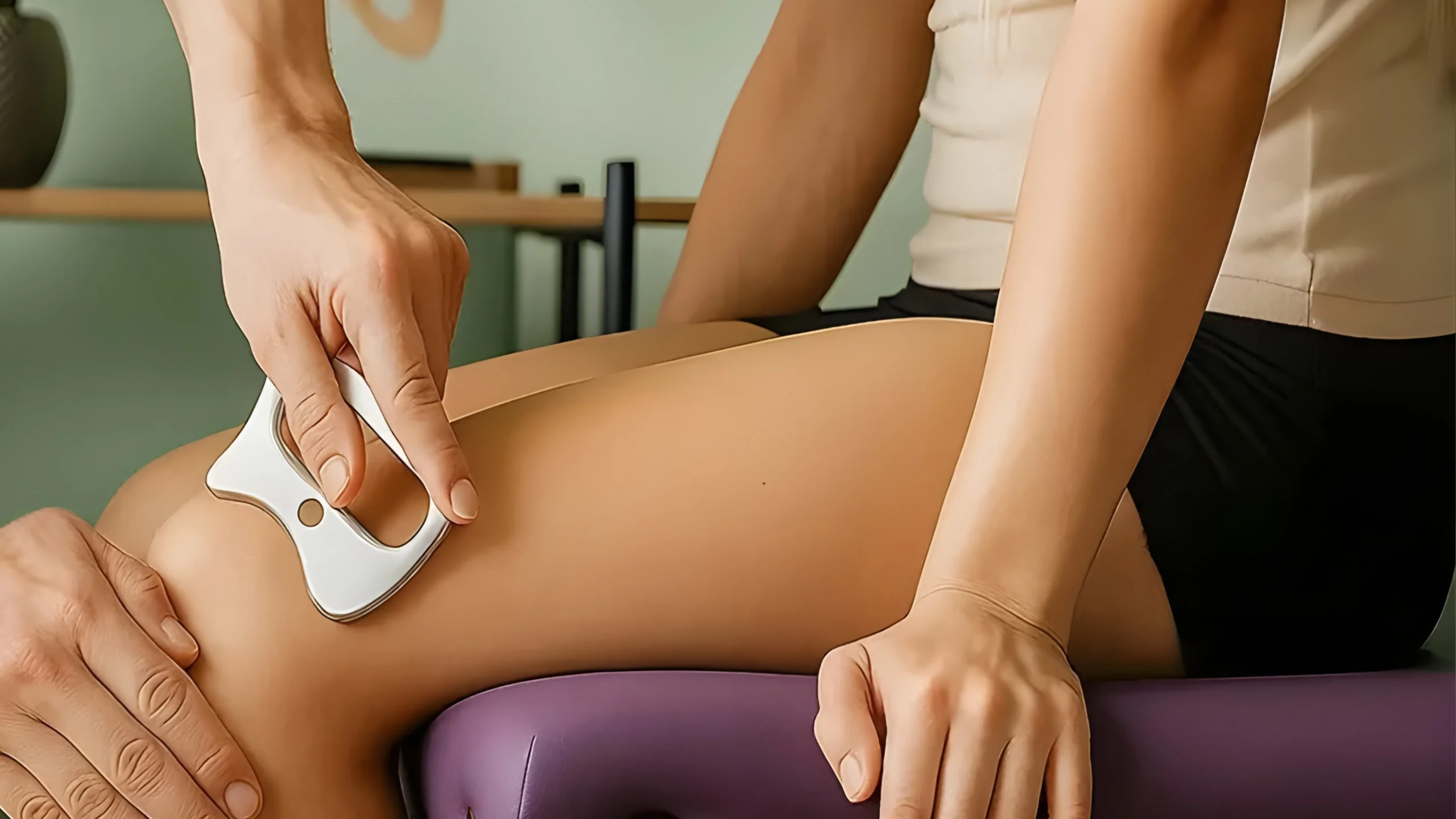
What is Quadriceps Muscle Strain?
Quadriceps Muscle Strain is a common musculoskeletal injury characterized by overstretching or tearing of one or more muscles in the quadriceps group located at the front of the thigh. These muscles are essential for knee extension, walking, running, and jumping.
Unlike chronic knee conditions, a quadriceps strain is typically an acute injury caused by sudden forceful movements or excessive load on the muscle.
At Physiotherapy Expert, we approach Quadriceps Muscle Strain through Muscle Healing Optimization and Functional Rehabilitation. Our goal is to promote safe tissue healing, restore muscle strength, and ensure a gradual return to full activity while preventing re-injury.
Understanding the Anatomy and Injury
The quadriceps muscle group consists of four muscles:
- Rectus femoris
- Vastus lateralis
- Vastus medialis
- Vastus intermedius
These muscles work together to:
- Extend the knee
- Stabilize the patella
- Assist in hip flexion (rectus femoris)
In a strain:
- Muscle fibers are overstretched or torn
- Inflammation and pain develop
- Muscle function is impaired
Types of Quadriceps Muscle Strain
Strains are classified based on severity:
Grade 1 (Mild)
- Minor muscle fiber damage
- Mild pain with minimal strength loss
Grade 2 (Moderate)
- Partial muscle tear
- Noticeable pain, swelling, and weakness
Grade 3 (Severe)
- Complete muscle tear
- Severe pain and inability to use the muscle
Understanding Severity and Functional Impact
Severity determines recovery and function:
- Mild: Discomfort during activity but minimal limitation
- Moderate: Difficulty in walking, running, or climbing stairs
- Severe: Significant loss of function and mobility
Early management helps prevent complications.
Common Causes of Quadriceps Muscle Strain
Sudden Forceful Movements
– Sprinting or jumping
– Rapid acceleration or deceleration
Muscle Imbalance
– Weak quadriceps or tight hamstrings
Inadequate Warm-Up
– Poor muscle preparation before activity
Fatigue
– Reduced muscle performance increases injury risk
Direct Trauma
– Impact during sports or accidents
Symptoms: Recognizing the Signs
Symptoms depend on severity.
Pain Symptoms
- Sudden sharp pain in the front of the thigh
- Pain during movement
Functional Symptoms
- Difficulty walking or running
- Reduced ability to straighten the knee
Visible Signs
- Swelling or bruising
- Muscle tenderness
Severe Signs
- Muscle defect or gap (in complete tear)
Diagnosis: Clinical Approach
At Physiotherapy Expert, diagnosis includes:
- Physical Examination: Assess pain, strength, and movement
- Range of Motion Testing
- Muscle Strength Assessment
- Imaging (if needed): Ultrasound or MRI for severe injuries
Physiotherapy Treatment: 12-Week Rehabilitation Protocol
Rehabilitation focuses on healing and restoring function.
Phase 1: Acute Care & Pain Management (Weeks 1–4)
Goals: Reduce pain and inflammation and protect the injured muscle
Treatment includes:
- Rest and activity modification
- Ice therapy (cryotherapy)
- Compression and elevation
- Gentle pain-free movements
Phase 2: Strengthening & Flexibility (Weeks 4–8)
Goals: Restore muscle strength and improve flexibility
Key interventions:
- Gradual strengthening exercises
- Stretching of quadriceps and surrounding muscles
- Isometric and light resistance training
Phase 3: Functional Recovery & Return to Activity (Weeks 8–12)
Goals: Restore full function and prevent re-injury
Training includes:
- Advanced strengthening exercises
- Sport-specific drills
- Agility and coordination training
Advanced Physiotherapy Techniques
- Neuromuscular Electrical Stimulation (NMES)
- Ultrasound therapy
- Soft tissue mobilization
- Taping and support techniques
Potential Complications
If not properly treated, quadriceps strain may lead to:
- Muscle weakness
- Recurrent injuries
- Scar tissue formation
- Reduced athletic performance
FREQUENTLY ASKED QUESTIONS
How long does a quadriceps strain take to heal?
Mild strains heal in 2–3 weeks, while moderate to severe injuries may take 6–12 weeks.
Can I continue exercising?
Light, pain-free activity may be allowed, but intense activity should be avoided initially.
When can I return to sports?
Once full strength, flexibility, and pain-free movement are restored.
How can I prevent it?
Proper warm-up, strengthening, and flexibility training are key.
RELATED CONDITIONS
- Hamstring Strain
- Muscle Tear
- Tendonitis