

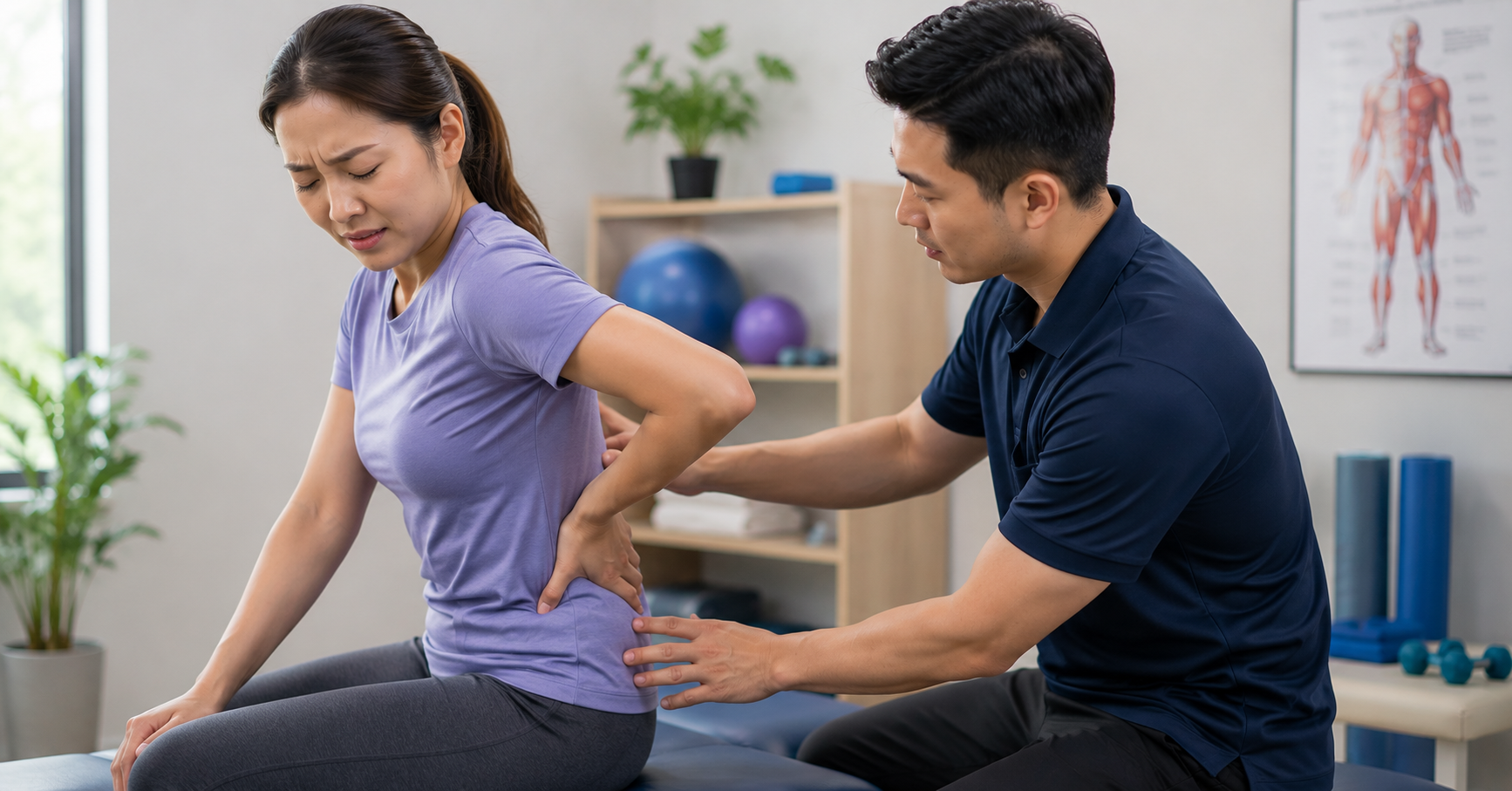
Understanding Muscle Spasms
Muscle spasms are sudden, involuntary contractions of a muscle that can cause tightness, discomfort, or pain. They can affect any muscle in the body but are commonly experienced in the back, neck, legs, feet, and arms. Muscle spasms may occur after physical activity, muscle overuse, dehydration, prolonged sitting, or an injury. In some cases, recurring muscle spasms may be linked to an underlying muscle, nerve, or joint problem.
Common Causes & Risk Factors
Muscle spasms can develop due to several physical, lifestyle, and medical factors.
- Muscle overuse or excessive exercise
- Muscle strain or injury
- Dehydration
- Electrolyte imbalance
- Prolonged sitting or standing
- Lack of stretching
- Stress and physical tension
- Muscle fatigue
Physiotherapy Assessment & Diagnosis
A physiotherapy assessment can help identify physical factors that may contribute to muscle spasms, particularly when they are related to muscle weakness, poor movement patterns, posture, or musculoskeletal problems.
- Posture evaluation
- Muscle strength testing
- Flexibility assessment
- Movement pattern evaluation
- Muscle tightness and tenderness assessment
The physiotherapist evaluates the affected muscles and surrounding joints to determine contributing factors and develop a suitable treatment plan.
Treatment Options for Muscle Spasms
Physiotherapy treatment aims to reduce muscle tension and pain, improve flexibility, restore movement, and prevent recurring spasms.
- Gentle stretching exercises
- Strengthening exercises
- Soft tissue techniques
- Trigger point release
- Joint mobilization
- Postural correction
- Movement and mobility exercises
- Heat therapy
- Ergonomic advice
Treatment is customized according to the location, frequency, severity, and underlying cause of the muscle spasms.
Prevention & Recovery Tips
Simple habits can help reduce the risk of muscle spasms and support recovery.
- Stay adequately hydrated
- Stretch regularly
- Warm up before physical activity
- Avoid sudden increases in exercise intensity
- Take regular breaks from prolonged sitting
- Follow proper exercise techniques
Early physiotherapy intervention can help manage muscle spasms, improve flexibility and strength, restore normal movement, and reduce the risk of recurring problems.
FREQUENTLY ASKED QUESTIONS
Can physiotherapy help with muscle spasms?
Yes. Physiotherapy can help manage muscle spasms by addressing muscle tightness, weakness, flexibility problems, posture, and movement restrictions. Treatment is selected according to the underlying cause.
What causes muscle spasms?
Muscle spasms may occur due to muscle fatigue, overuse, dehydration, prolonged inactivity, muscle injury, poor posture, or irritation of nearby nerves.
How can I reduce a muscle spasm at home?
For a mild muscle spasm, gentle stretching, rest, adequate hydration, and comfortable movement may help. Avoid forceful stretching or activity that increases pain.
When should I see a physiotherapist for muscle spasms?
Consider seeing a physiotherapist if muscle spasms occur frequently, last for a long time, limit movement, or interfere with daily activities. A professional assessment can help identify contributing physical factors.
How can I prevent recurring muscle spasms?
Regular stretching, adequate hydration, gradual exercise progression, proper warm-ups and cool-downs, good posture, and appropriate strengthening exercises may help reduce the risk of recurring muscle spasms.

