

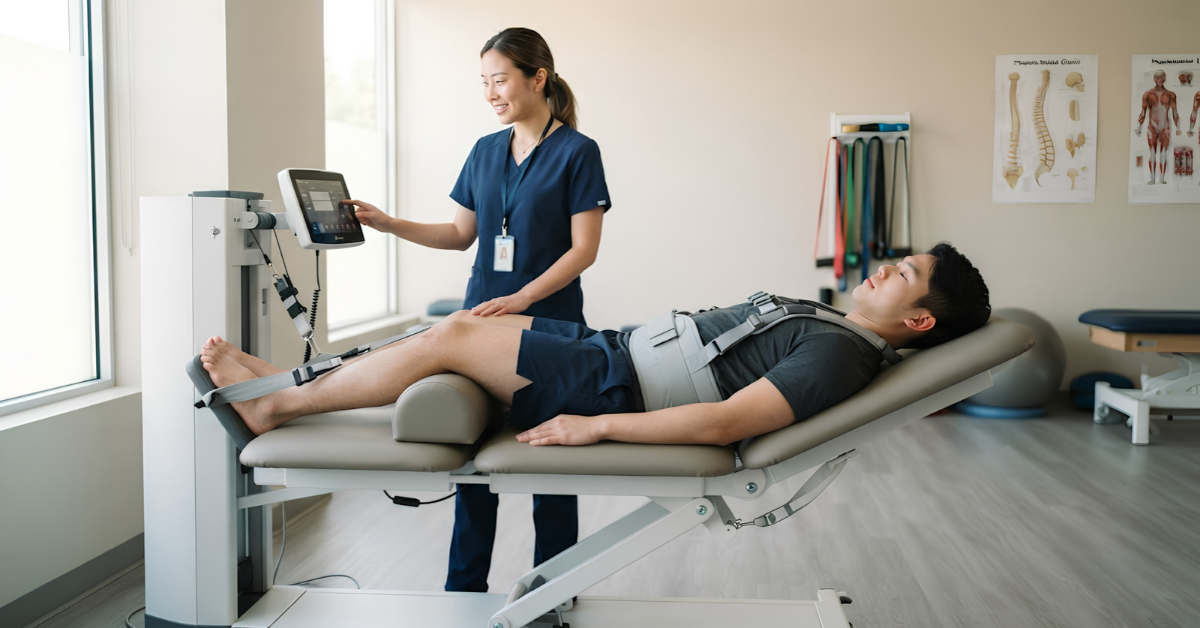
What Is Traction Therapy?
Spinal pressure, nerve irritation, disc-related discomfort, stiffness, and restricted movement can make everyday activities difficult and uncomfortable. Traction Therapy is a physiotherapy technique that applies a carefully controlled pulling force to the spine or affected joint to create space between structures and reduce mechanical stress. It is commonly used as part of rehabilitation for selected spinal and musculoskeletal conditions, with the treatment intensity adjusted according to the patient’s symptoms and clinical findings.
At PhysioExpert, we use Traction Therapy as part of a broader rehabilitation strategy rather than as an isolated treatment. Our physiotherapists first assess spinal movement, pain patterns, neurological symptoms, posture, and functional limitations before determining whether traction is appropriate. The treatment is then adapted to the patient’s condition to provide controlled decompression while supporting a gradual return to normal movement.
Traction Therapy may be performed manually by a physiotherapist or with a specialized mechanical traction device. Depending on the treatment area, controlled force is applied to the cervical or lumbar spine. This can temporarily reduce compressive loading, decrease muscle guarding, and create a more comfortable environment for movement and therapeutic exercise.
In modern physiotherapy, Traction Therapy is frequently incorporated into Spine Rehabilitation, Orthopedic Rehab, Neurological Rehabilitation, and Chronic Pain Management programs. It may be considered for selected patients with radiating pain, spinal stiffness, disc-related symptoms, or mechanical restrictions after appropriate clinical assessment.
The Core Objectives of Traction Therapy
The goal of a Traction Therapy session at PhysioExpert extends beyond simply stretching the spine. It focuses on reducing mechanical stress and creating better conditions for functional rehabilitation. The primary objectives include:
Reducing Spinal Compression:
Decreases loading between selected spinal structures during treatment.
Easing Nerve Irritation:
May reduce mechanical pressure associated with certain radiating pain conditions.
Improving Spinal Movement:
Helps patients with restricted or uncomfortable spinal mobility.
Reducing Muscle Guarding:
Gentle traction can help relax muscles that tighten in response to pain.
Managing Radiating Symptoms:
May provide temporary relief for selected cases involving pain extending into the arms or legs.
Supporting Exercise Therapy:
Reduced discomfort can make subsequent rehabilitation exercises easier to perform.
Types of Traction Therapy Used in Physiotherapy
Cervical Traction
Applies controlled traction to the neck and is commonly considered for selected cervical spine conditions involving stiffness or radiating symptoms.
Lumbar Traction
Uses controlled pulling forces through the lower back to reduce spinal loading and improve comfort in appropriate cases.
Manual Traction
A physiotherapist applies traction manually while monitoring the patient's response throughout the technique.
Mechanical Traction
A specialized device delivers controlled traction force with adjustable intensity and treatment duration.
Intermittent Traction
Alternates between periods of traction and release, creating a rhythmic treatment pattern that may be more comfortable for some patients.
Physiological Effects of Traction Therapy
Traction Therapy works through several important physiological mechanisms:
Spinal Unloading:
Temporarily reduces compressive forces affecting spinal structures.
Joint Separation:
Creates controlled distraction between selected joint surfaces.
Reduced Muscle Guarding:
May decrease protective muscular tension associated with painful movement.
Mechanical Decompression:
Can reduce pressure around certain spinal structures during treatment.
Neurological Symptom Modulation:
Can influence symptoms associated with mechanical nerve irritation.
Conditions Treated with Traction Therapy
Traction Therapy can be highly effective for:
A
Cervical Radiculopathy
B
Lumbar Radiculopathy
C
Selected Herniated Disc Conditions
D
Cervical Spondylosis
E
Lumbar Spondylosis
F
Spinal Stiffness
G
Mechanical Neck & Back Pain
Contraindications: When to Avoid Traction Therapy
Although generally safe when administered by trained professionals, Traction Therapy may be contraindicated in certain cases:
A
Spinal Fractures or Recent Trauma
B
Severe Spinal Instability
C
Spinal Cord Compression
D
Active Spinal Infection
E
Malignancy Affecting the Spine
F
Severe Osteoporosis
Integrating Advanced Technology in Traction Therapy
At PhysioExpert, we enhance Traction Therapy through:
Computer-Controlled Traction Systems:
Providing accurate control over force, duration, and treatment cycles when mechanical traction is indicated.
Clinical Response Monitoring:
Adjusting treatment parameters according to symptoms, comfort, and response during each session.
Multi-Modal Physiotherapy:
Integrating Traction Therapy with therapeutic exercises, manual techniques, posture training, core strengthening, and functional rehabilitation for a complete treatment approach.
The PhysioExpert Approach to Traction Therapy
Our patient-centered rehabilitation model includes:
Assessment:
Evaluating spinal mobility, pain distribution, neurological symptoms, posture, and functional limitations.
Treatment Customization:
Determining whether traction is appropriate and selecting the suitable technique, force, and treatment duration.
Functional Integration:
Following traction with targeted mobility, strengthening, stabilization, and movement exercises when appropriate.
Recovery Education:
Providing posture guidance, activity modification, home exercises, and strategies for managing spinal symptoms between sessions.
FREQUENTLY ASKED QUESTIONS
Is Traction Therapy painful?
Traction should not cause significant pain. Most patients experience a gentle pulling or stretching sensation during treatment.
How long does a Traction Therapy session last?
Sessions usually last between 15–30 minutes, depending on the treatment area, technique, and individual rehabilitation plan.
Can Traction Therapy help with a slipped or herniated disc?
Traction may provide symptom relief for some people with selected disc-related conditions, but it is not appropriate for every disc problem. A physiotherapist should assess the condition before treatment.
Is Traction Therapy suitable for everyone with back pain?
No. The suitability of traction depends on the cause of the pain, clinical findings, and overall health. A proper assessment is important before beginning treatment.
Can I exercise after Traction Therapy?
Your physiotherapist will advise you based on your symptoms and treatment response. In many rehabilitation programs, appropriate exercises are used alongside traction to improve long-term function.
Experience Advanced Healing with PhysioExpert
Traction Therapy is a specialized physiotherapy technique that uses controlled spinal or joint distraction to manage mechanical stress and improve movement tolerance in carefully selected patients. When incorporated into an individualized rehabilitation program, it can complement exercise therapy and other physiotherapy techniques to support functional recovery.
If you are experiencing neck pain, back pain, radiating symptoms, spinal stiffness, or selected disc-related problems, PhysioExpert is ready to provide individualized Traction Therapy following a detailed clinical assessment and rehabilitation plan designed around your specific needs.

