
What Is Manual Therapy?
Muscle tightness, joint stiffness, chronic pain, restricted mobility, and post-injury dysfunction can significantly interfere with daily activities and overall quality of life. Manual Therapy is a specialized hands-on physiotherapy technique that has become a cornerstone of modern musculoskeletal rehabilitation. It is widely used for pain relief, joint mobility restoration, soft tissue release, and functional recovery. Through skilled hands-on techniques, Manual Therapy helps reduce pain, improve movement, restore joint mechanics, and promote natural healing.
At PhysioExpert, we recognize that effective rehabilitation often requires more than exercise-based treatment alone. Our approach to Manual Therapy combines advanced clinical expertise with evidence-based physiotherapy protocols to provide safe, targeted, and highly personalized care. Whether you are managing chronic musculoskeletal pain, recovering from orthopedic or sports injuries, or seeking improved flexibility and mobility, Manual Therapy can be an essential component of your rehabilitation program.
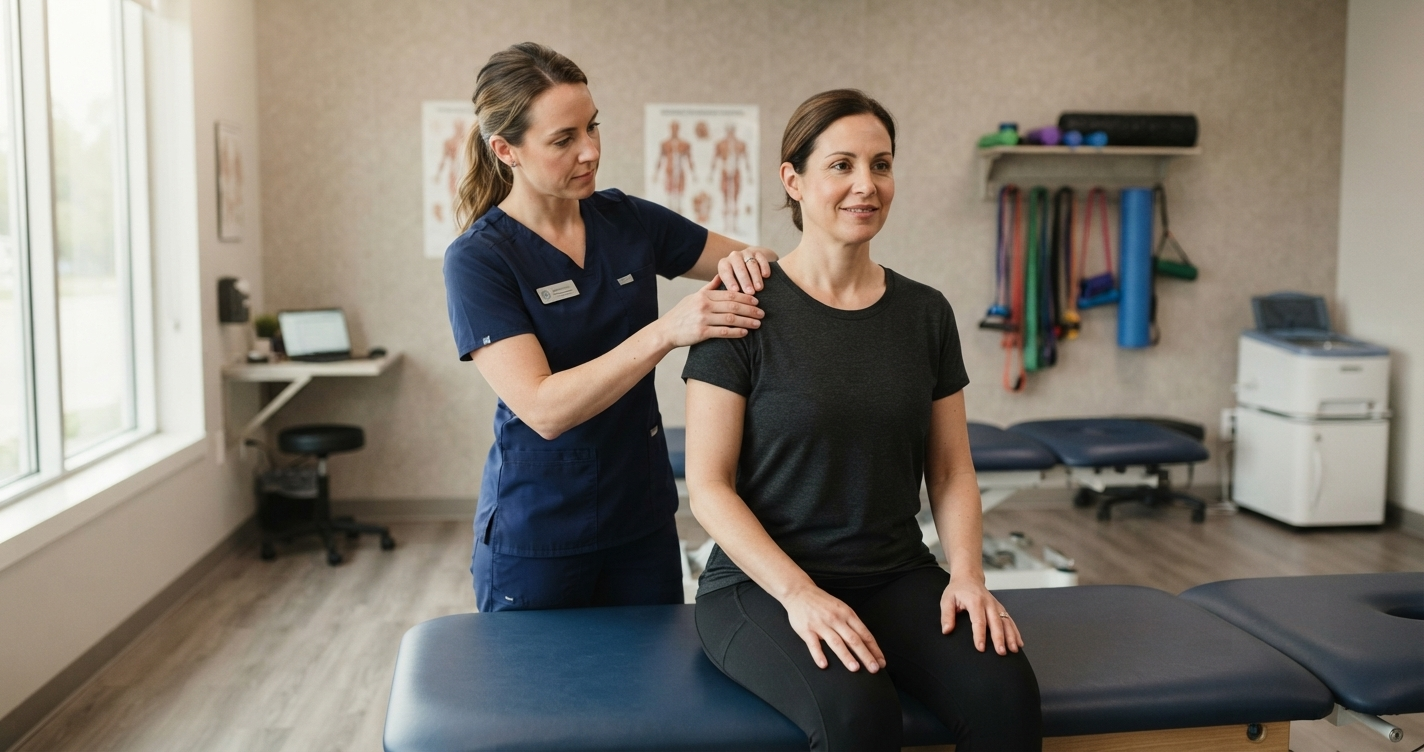
Manual Therapy involves the use of skilled hands-on techniques to assess and treat muscles, joints, ligaments, fascia, and nerves. These techniques include joint mobilization, soft tissue mobilization, myofascial release, stretching, and neural mobilization. By restoring normal movement mechanics, reducing muscle tension, and improving tissue flexibility, Manual Therapy supports the body’s natural healing process.
Unlike medication-based pain management, Manual Therapy is a mechanical intervention that addresses the underlying cause of musculoskeletal dysfunction while improving mobility, circulation, and neuromuscular function.
In modern physiotherapy, Manual Therapy is frequently integrated into Orthopedic Rehab, Sports Physiotherapy, Pain Management, Spine Rehabilitation, and Mobility Restoration programs. It is particularly beneficial for patients experiencing joint stiffness, muscle tightness, chronic pain, movement dysfunction, or delayed recovery following injury or surgery.
The Core Objectives of Manual Therapy
The goal of a Manual Therapy session at PhysioExpert extends beyond temporary symptom relief. It is designed to create lasting improvements in musculoskeletal health and functional recovery. The primary objectives include:
Improving Joint Mobility:
Restores normal joint movement and mechanics.
Reducing Pain:
Hands-on techniques help decrease pain by improving tissue function and stimulating natural pain-relieving mechanisms.
Releasing Muscle Tightness:
Reduces muscular tension, trigger points, and soft tissue restrictions.
Restoring Soft Tissue Flexibility:
Improves muscle and fascial mobility to enhance movement quality.
Enhancing Functional Movement:
Supports better posture, balance, coordination, and overall physical performance.
Accelerating Recovery:
Promotes faster healing following injury, surgery, or repetitive strain.
Types of Manual Therapy Used in Physiotherapy
Joint Mobilization
Gentle, controlled passive movements applied to joints to reduce stiffness, improve mobility, and restore normal joint mechanics.
Joint Manipulation
A precise, high-velocity, low-amplitude technique used by qualified physiotherapists to restore joint function and relieve pain in selected conditions.
Soft Tissue Mobilization
Hands-on treatment targeting muscles, tendons, ligaments, and connective tissues to relieve tension, improve circulation, and restore flexibility.
Muscle Energy Techniques (MET)
An active treatment approach where patients perform gentle muscle contractions while the therapist guides movement to improve joint alignment and flexibility.
Trigger Point Therapy
Focused manual pressure applied to painful muscle knots to relieve referred pain and improve muscle function.
Physiological Effects of Manual Therapy
Manual Therapy works through several important physiological mechanisms:
Joint Mobilization:
Restores normal joint mechanics and movement..
Muscle Relaxation:
Reduces muscle guarding, spasms, and excessive tension.
Neuromuscular Re-education:
Restores efficient muscle activation and movement patterns.
Pain Modulation:
Stimulates neurological pathways that decrease pain perception.
Fascial Release:
Reduces connective tissue restrictions and improves tissue flexibility.
Conditions Treated with Manual Therapy
Manual Therapy can be highly effective for:
A
Chronic Neck Pain
B
Lower Back Pain
C
Frozen Shoulder
D
Rotator Cuff Injuries
E
Arthritis & Joint Stiffness
F
Sports Injuries & Muscle Recovery
G
Sciatica & Nerve Compression
Contraindications: When to Avoid Manual Therapy
Although generally safe when administered by trained professionals, Manual Therapy may be contraindicated in certain cases:
A
Acute Bone Fractures
B
Severe Osteoporosis
C
Active Joint or Bone Infections
D
Recent Surgery Without Physician Approval
E
Severe Ligament Instability
F
Malignancy Affecting Bones or Joints
Integrating Advanced Technology in Manual Therapy
At PhysioExpert, we enhance traditional manual therapy techniques through:
Comprehensive Movement Assessment:
Advanced clinical evaluation to identify joint restrictions, muscle imbalance, and movement dysfunction.
Functional Rehabilitation Integration:
Combining Manual Therapy with therapeutic exercise, mobility training, and posture correction.
Multi-Modal Physiotherapy:
Integrating Manual Therapy with electrotherapy, dry needling, cupping therapy, heat therapy, cryotherapy, and exercise rehabilitation for comprehensive recovery.
The PhysioExpert Approach to Manual Therapy
Our patient-centered rehabilitation model includes:
Assessment:
Identifying pain sources, movement dysfunctions, joint restrictions, and muscle imbalances.
Treatment Customization:
Selecting the most appropriate manual therapy techniques based on the patient's condition and rehabilitation goals.
Functional Integration:
Combining Manual Therapy with strengthening, stretching, posture correction, and movement retraining.
Recovery Education:
Providing home-care strategies, ergonomic advice, and exercise programs to maintain long-term treatment outcomes.
FREQUENTLY ASKED QUESTIONS
Is Manual Therapy painful?
Most patients experience gentle pressure and stretching during treatment. Mild soreness may occur afterward but usually resolves within 24–48 hours.
How long does a session last?
Sessions usually last between 30–60 minutes depending on the condition being treated.
Can athletes benefit from Manual Therapy?
Yes. Manual Therapy is widely used in sports rehabilitation to improve mobility, reduce muscle tightness, accelerate recovery, and enhance athletic performance.
Is Manual Therapy safe?
Yes, when performed by qualified physiotherapists using evidence-based techniques and individualized treatment protocols.
How many sessions will I need?
The number of sessions depends on your condition, severity, and rehabilitation goals. Your physiotherapist will develop a personalized treatment plan after a comprehensive assessment.
Experience Advanced Healing with PhysioExpert
Manual Therapy is more than a hands-on treatment—it is a modern, evidence-based rehabilitation approach that supports pain relief, mobility restoration, and functional recovery. By combining skilled manual techniques with personalized physiotherapy strategies, we help patients recover faster, move better, and achieve long-term musculoskeletal health.
If you are experiencing chronic pain, joint stiffness, muscle tightness, restricted mobility, or recovering from an injury or surgery, PhysioExpert is ready to provide specialized Manual Therapy solutions designed to optimize your recovery, restore movement, and improve your quality of life.

