- rrmunjal
- 0 Comments
Our knee alignment is one of the most important factors that influence our walking, running, standing, and overall daily functioning. Misalignment of our lower limbs can cause unusual stress on our joints and muscles. Two of the most common conditions associated with misalignment of our knee joints are Genu Valgum (knock knees) and Genu Varum (bow legs).
Although mild variations can be considered normal in children, any severe misalignment can cause pain, instability, and long-term joint problems if not treated properly.
At PhysioExpert, we encounter numerous patients of all ages who experience difficulties in knee alignment. With our specialized assessment and rehabilitation programs, we help patients change their movement patterns, strengthen their surrounding muscles, and achieve functional alignment.
What Is Genu Valgum (Knock Knees)?
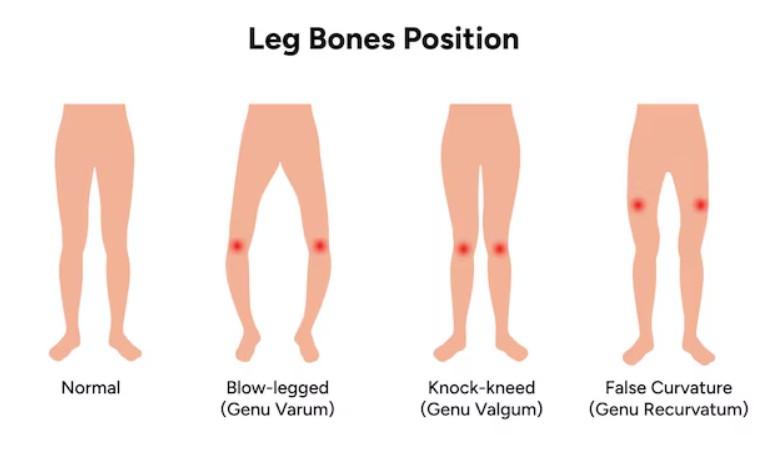
Genu valgum is a condition where the knees are angled towards each other and touch when the ankles are kept apart when standing with the legs extended. This gives rise to the appearance of knock knees.
In genu valgum, the position of the leg changes so that more pressure is put on the outer side of the knee joint.
Common Signs of Genu Valgum
- Knees touch while ankles remain apart
- Change in walking style
- Pain in the knees when standing or walking
- Instability of the knees when running
- Stress on the hips and ankles
In children up to the age of 9 years, genu valgum might be considered a minor growth problem. However, when genu valgum persists after age 10 years or in adults, it needs to be examined by professionals.
What Is Genu Varum (Bow Legs)?
The knees are kept apart when the ankles are together, giving rise to the appearance of bowlegs.
In genu varum, more pressure is put on the inner side of the knee joint.
Common Signs of Genu Varum
- Knees are kept apart when ankles are together
- Bowlegs
Causes of Genu Valgum and Genu Varum
There are many reasons for which the knees can be misaligned. It is important to understand these causes in order to treat the condition properly.
- Developmental Conditions in Children : In the early stages of growth, children may experience periods of bow legs or knock knees.
- Genetic Conditions : Some people naturally have differences in their bone alignment and tends to have valgum and varum.
- Muscle Imbalances : Weakened hip muscles, tight adductor muscles, or poor core strength can impact knee alignment.
- Nutritional Deficiencies : Rickets, a vitamin D deficiency, can impact bone growth.
- Previous Trauma : Poor healing of fractures or ligament injuries can impact bone alignment.
- Obesity or Excess Weight : Excess weight on growing bones can impact knee alignment.
- Degenerative Joint Disease : In adults, osteoarthritis can impact knee alignment over time.
How Genu Valgum and Genu Varum Affect Daily Activities
At first glance, knee misalignment may not appear to have major impacts. However, it can have significant effects in the future.
- Difficulties in Walking and Running
- Abnormal knee alignment can disrupt the natural movement of the knee.
- Increased Joint Stress.
- Inconsistent stress can hasten the degeneration of the cartilage in the knee.
- Reduced Athletic Performance
- Sports enthusiasts may experience reduced stability, agility, and increased risk of injury.
- Hip and Ankle Compensation
- Other joints will have to compensate for the abnormal knee position, leading to pain in the hip and ankle.
- Increased Risk of Knee Pain In the future, this can result in chronic pain in the knee.
Understanding the Role of Physiotherapy
Physiotherapy plays a crucial role in managing genu valgum and genu varum, especially when the condition is functional or related to muscular imbalance.
At PhysioExpert, we focus on addressing the underlying biomechanical causes rather than only treating symptoms.
Key Goals of Rehabilitation
- Improve lower limb alignment
- Strengthen hip and knee stabilizing muscles
- Correct faulty movement patterns
- Improve balance and coordination
Reduce joint stress during activities
The PhysioExpert Approach to Managing Genu Valgum and Genu Varum
At PhysioExpert, we believe in a personalized and scientifically guided rehabilitation plan.
Comprehensive Assessment
Our therapists evaluate:
- Knee alignment
- Gait and movement patterns
- Muscle strength and flexibility
- Hip and core stability
- Functional mobility
This detailed assessment helps us design targeted treatment strategies.
Strengthening Key Muscle Groups
Corrective exercises focus on strengthening:
- Hip abductors
- Gluteal muscles
- Quadriceps
- Core stabilizers
These muscles play a major role in maintaining proper knee alignment.
Flexibility and Mobility Training
Tight muscles can worsen alignment issues. Controlled stretching helps restore normal joint mechanics.
Movement Correction
Patients are trained to improve:
- Walking patterns
- Squatting mechanics
- Stair climbing techniques
- Functional movement control
This reduces abnormal joint loading.
Postural and Biomechanical Training
At PhysioExpert, we teach patients how posture and body mechanics influence knee alignment and long-term joint health.
Benefits of Physiotherapy for Genu Valgum and Genu Varum
With structured rehabilitation, patients can experience:
- Improved knee alignment control
- Reduced joint stress
- Better walking mechanics
- Improved stability and balance
- Reduced knee pain
- Prevention of future joint problems
Early physiotherapy intervention can significantly reduce the likelihood of long-term complications.
Who Can Benefit from Rehabilitation?
Physiotherapy management at PhysioExpert is beneficial for:
- Children with persistent knock knees or bow legs
- Adolescents experiencing growth-related alignment issues
- Adults with knee pain due to alignment problems
- Athletes with biomechanical knee stress
- Individuals recovering from knee injuries
