

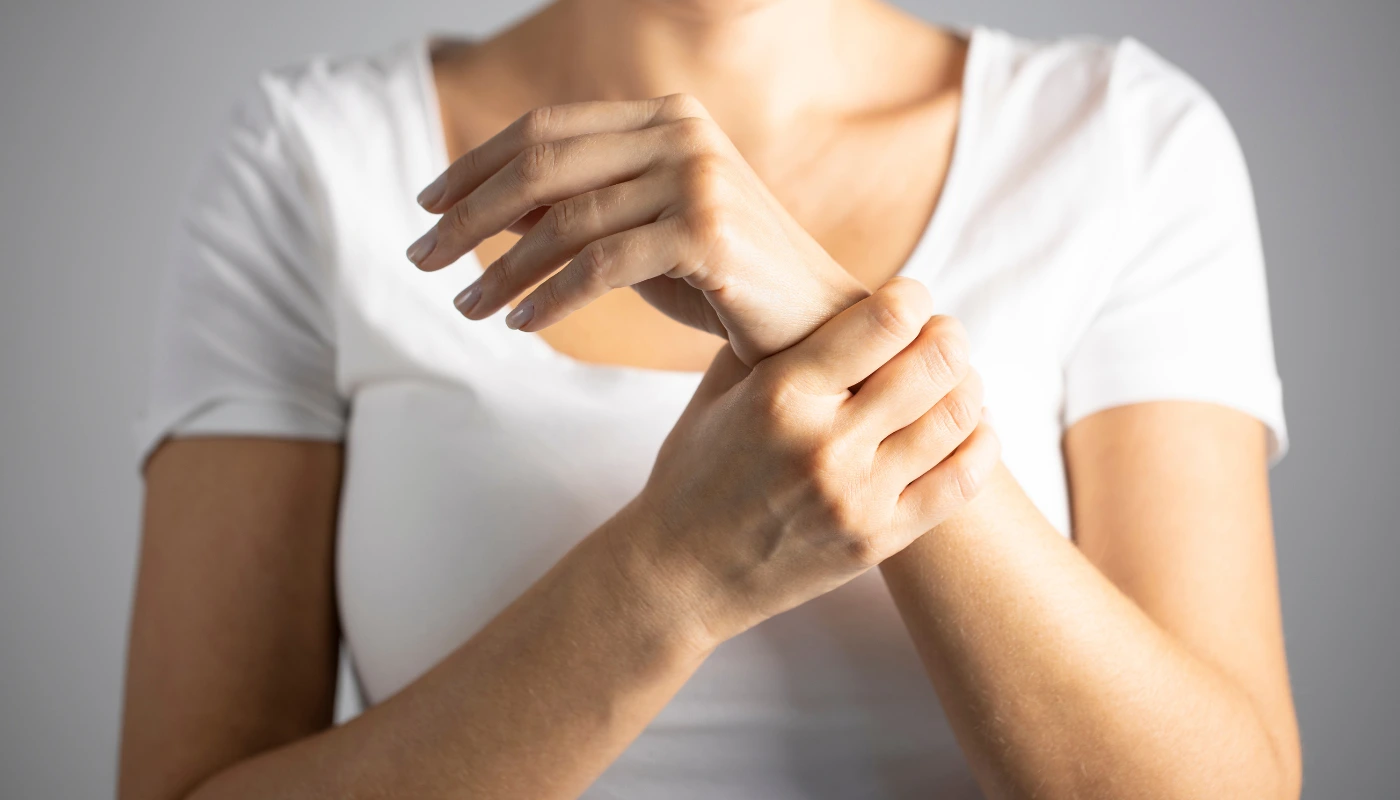
WHAT IS WRIST DROP?
Wrist Drop, clinically identified as Radial Nerve Palsy, is a debilitating condition characterized by the inability to extend the wrist and fingers. This results in the hand hanging flaccidly in a flexed position when the arm is extended. The condition stems from an interruption in the signals sent by the radial nerve, which is the primary motor pathway for the extensor muscles of the forearm.
At Physio Expert, we recognize that Wrist Drop is not just a physical deformity but a significant functional barrier that impacts a patient’s ability to perform basic daily tasks—from gripping a glass of water to typing on a keyboard. Our approach combines advanced neurological rehabilitation with musculoskeletal stabilization to facilitate nerve healing and prevent permanent muscle atrophy. Whether the cause is a sudden trauma or gradual compression, our goal is to “re-awaken” the nerve and restore the vital link between the brain and the hand.
The Anatomy of the Radial Nerve
The radial nerve is one of the major nerves of the upper limb, originating from the brachial plexus (C5-T1 nerve roots). It travels down the back of the arm, winds around the humerus bone in the “spiral groove,” passes the elbow, and continues into the forearm and hand. It is responsible for:
- Motor Function: Extension of the elbow, wrist, and fingers, and supination of the forearm.
- Sensory Function: Providing sensation to the back of the arm, forearm, and the “web space” between the thumb and index finger.
WHAT ARE THE SIGNS AND SYMPTOMS OF WRIST DROP?
The presentation of Wrist Drop depends heavily on where along the arm the radial nerve has been compromised. Common symptoms include:
- Inability to Extend the Wrist: The hallmark sign where the hand “drops” toward the palm and cannot be lifted upward.
- Finger Extension Weakness: Difficulty straightening the fingers at the knuckles (MP joints).
- Decreased Grip Strength: Because the wrist cannot be stabilized in an extended position (the optimal position for power), the ability to grip objects is severely diminished.
- Numbness and Tingling: Paresthesia on the back of the hand, specifically over the thumb, index, and middle fingers.
- Muscle Wasting (Atrophy): If left untreated, the muscles on the back of the forearm may begin to shrink due to lack of nerve stimulation.
- Coordination Issues: Difficulty with fine motor tasks such as buttoning a shirt, writing, or using a fork.
- Pain: While often painless, some patients experience a dull ache in the forearm or sharp pain at the site of nerve compression.
WHAT ARE THE CAUSES FOR WRIST DROP?
Wrist Drop can occur suddenly (acute) or develop over time (chronic). The radial nerve is particularly vulnerable to pressure because it lies close to the bone in several areas.
1. “Saturday Night Palsy”
This is a classic cause of radial nerve compression. It occurs when a person falls into a deep sleep (often influenced by alcohol) with their arm draped over a hard chair back or edge, compressing the nerve in the upper arm for several hours.
2. Fractures of the Humerus
The radial nerve wraps tightly around the mid-shaft of the humerus (upper arm bone). A fracture in this area can easily lacerate, stretch, or trap the nerve, leading to immediate wrist drop.
3. “Honeymoon Palsy”
Similar to Saturday night palsy, this occurs when another person sleeps on a patient’s arm, causing prolonged pressure on the nerve.
4. Improper Use of Crutches
Using “axillary” crutches that are too tall can put direct pressure on the radial nerve in the armpit (axilla), leading to weakness in the entire arm, including the triceps.
5. Repetitive Stress and Entrapment
Occupations requiring repetitive forceful movements or the use of vibrating tools can lead to entrapment at the Radial Tunnel near the elbow.
6. Systemic Conditions
- Diabetes Mellitus: Diabetic neuropathy can make nerves more susceptible to compression.
- Lead Poisoning: Historically, lead toxicity was a known cause of bilateral wrist drop.
- Autoimmune Diseases: Conditions like Polyarteritis Nodosa can cause inflammation of the blood vessels supplying the nerve (vasculitis).
PATHOLOGY: NERVE INJURY CLASSIFICATION
The pathology of Genu Varum involves a “vicious cycle” of mechanical loading. As the knee bows outward, the Medial Compartment of the knee undergoes excessive compression. This leads to:
- Meniscal Thinning: The inner shock absorber (medial meniscus) flattens.
- Cartilage Erosion: The protective coating of the bone wears away.
- Bone Spur Formation: The body creates extra bone (osteophytes) to try and stabilize the shifting joint.
- Ligament Laxity: The Lateral Collateral Ligament (LCL) becomes overstretched and “loose,” leading to joint instability.
DIAGNOSIS FOR WRIST DROP
A precise diagnosis ensures that we target the correct site of compression—whether it’s the axilla, the spiral groove, or the radial tunnel.
1. Clinical Muscle Testing
We test the “High” vs “Low” radial nerve function. If the patient can extend their elbow (triceps) but not their wrist, the injury is likely in the mid-arm. If they can extend the wrist but not the fingers, it is likely a deep branch injury in the forearm.
2. Electromyography (EMG) & Nerve Conduction Studies (NCS)
These are the most definitive tests. NCS measures the speed of the electrical impulse, while EMG checks for “denervation” signals in the muscles. These tests help us determine if the nerve is regenerating.
3. Imaging Studies (MRI & Ultrasound)
- MRI: To rule out tumors or cysts pressing on the nerve.
- Nerve Ultrasound: An emerging tool that allows us to see “nerve swelling” or “neuromas” at the site of injury.
- X-Ray: Essential if a humerus fracture is suspected as the cause.
TREATMENT FOR WRIST DROP
Medical Management
- NSAIDs: To reduce inflammation if the nerve is being pinched by swollen tendons.
- Vitamin B12 Supplements: Often prescribed to support the metabolic health of the myelin sheath during nerve regeneration.
- Pain Management: Medications like Gabapentin if the patient experiences “nerve burning.”
Surgical Intervention
Surgery is considered if there is no sign of recovery on EMG after 3–4 months.
- Nerve Decompression: Releasing the fibrous bands or bones pressing on the nerve.
- Nerve Grafting/Transfer: Using a healthy nerve from elsewhere to bypass the damaged section.
- Tendon Transfer: If the nerve cannot recover, tendons from other muscles are moved to perform the job of wrist extension.
PHYSIOTHERAPY TREATMENT AT PHYSIO EXPERT
At Physio Expert, we utilize a three-phase “Neuro-Rehab” approach to ensure the hand remains functional while the nerve heals.
Phase 1: Protection & Prevention (Weeks 1–4)
The primary goal is to prevent contractures (permanent shortening of muscles) and joint stiffness.
- Custom Cock-up Splinting: We provide a splint that holds the wrist in 30 degrees of extension. This prevents the flexor muscles from becoming tight and keeps the extensor muscles in a shortened position, making it easier for them to work once the nerve recovers.
- Passive Range of Motion (PROM): The therapist manually moves each finger and the wrist to maintain joint lubrication.
- Edema Management: Using light massage and elevation to ensure the hand doesn’t swell.
- TENS: To manage any localized pain at the site of compression.
Phase 2: Re-innervation & Muscle Activation (Weeks 5–12)
As the nerve begins to heal, we start “waking up” the muscles.
- Electrical Muscle Stimulation (EMS): This is critical. We use electrical pulses to artificially contract the wrist extensors. This prevents atrophy (muscle wasting) so that when the nerve finally heals, there is still muscle left to control.
- Neuromuscular Electrical Stimulation (NMES): Used once the patient shows the first flickers of voluntary movement.
- Nerve Gliding (Neurodynamics): Specific movements to ensure the radial nerve doesn’t get stuck in scar tissue as it heals.
- Gravity-Eliminated Exercises: We place the arm on a smooth board so the patient can practice moving the wrist side-to-side without having to fight gravity.
Phase 3: Strengthening & Functional Independence (Months 3–6)
- Progressive Resistance Training: Using light weights and resistance bands (Therabands) to build endurance in the forearm.
- Grip Strengthening: Utilizing putty and hand grippers to restore the “power grip.”
- Fine Motor Retraining: Activities like picking up coins, using tweezers, and typing to restore the delicate coordination of the hand.
- Mirror Therapy: A neurological technique where the patient looks at their healthy hand in a mirror while moving both. This “tricks” the brain into sending stronger signals to the affected side.
THE PHYSIO EXPERT ADVANTAGE: ADVANCED MODALITIES
We use specialized technology to maximize the speed of nerve repair:
- Laser Therapy (LLLT): High-intensity laser to stimulate the mitochondria in the nerve cells, providing the energy needed for axonal regrowth.
- Functional Electrical Stimulation (FES): Wearing a device that stimulates extension during real-world tasks like reaching for a cup.
- Biofeedback: Using sensors to show the patient visual proof on a screen when their muscle is firing, even if they can’t see the wrist move yet.
PATIENT EDUCATION: LIFE WITH RADIAL NERVE PALSY
Success at Physio Expert depends on the patient’s adherence to “Nerve Health” guidelines.
1. Splint Compliance
The splint must be worn as directed. Removing it and allowing the wrist to “drop” for long periods can stretch the healing nerve and lead to permanent “stiff hand.”
2. Skin Care
Because the radial nerve also provides sensation, the back of the hand may be numb. Patients are taught to check for burns or cuts they might not feel, especially when cooking or using hot water.
3. Ergonomic Modifications
We provide a “Workstation Audit.” If you work at a computer, we suggest specific mouse and keyboard setups that minimize strain on the healing extensors.
4. Smoking and Nutrition
Smoking constricts blood vessels and significantly slows down nerve regeneration. We advocate for a diet rich in B-vitamins, Magnesium, and antioxidants to fuel the “metabolic engine” of the nerve.
RELATED CONDITIONS
- Carpal Tunnel Syndrome: Compression of the median nerve at the wrist (affects the palm and thumb).
- Cubital Tunnel Syndrome: Compression of the ulnar nerve at the elbow (affects the pinky finger).
- Tennis Elbow (Lateral Epicondylitis): Often confused with radial nerve issues, but it is a tendon problem rather than a nerve problem.
- De Quervain’s Tenosynovitis: Inflammation of the tendons at the base of the thumb.